


Editor's note: The patient’s name has been changed to Mackenzie at her request to protect her privacy. Her mother and grandmother are identified by their real names with their consent.
PASADENA, Calif., April 7, 2026—Arginase 1 deficiency (ARG1-D) patients across the United States cheered when the U.S. Food and Drug Administration (FDA) approved pegzilarginase (brand name Loargys®) on February 23, 2026. Tanja Brandt and her mother, Christine (Chris) Zahn, were among those celebrating.
When Tanja’s daughter was diagnosed with ARG1-D in 2016, they knew that the road ahead would be bumpy. They didn’t know their journey would include joining a clinical trial, building a patient community, launching a new nonprofit, and losing and then regaining access to a valuable treatment—twice.
They are thrilled to now see the treatment become reliably available to their entire community. “One of the most exciting things is that it will become a much easier process for hospitals and doctors to be able to enroll their patients in the treatment,” said Chris.
Pegzilarginase is an enzyme replacement therapy designed to do what the body of an ARG1-D patient cannot — break down excess arginine and reduce its toxic effects on the nervous system. It will be marketed in the U.S. by Immedica.
Arginase 1 deficiency, also known as hyperargininemia, is an ultrarare urea cycle disorder. The arginase enzyme does not work properly in people with ARG1-D. As a result, the amino acid arginine builds up in the blood instead of being broken down and safely removed.
High arginine levels are toxic to the nervous system, particularly the brain and spinal cord, which leads to progressive spasticity, causing muscles to become stiff, tight, and difficult to control. Many individuals develop trouble with walking, balance, coordination, and fine motor skills. What often begins as mild stiffness can slowly worsen, affecting independence and daily activities. ARG1-D can be fatal if left untreated.
The journey to diagnosis
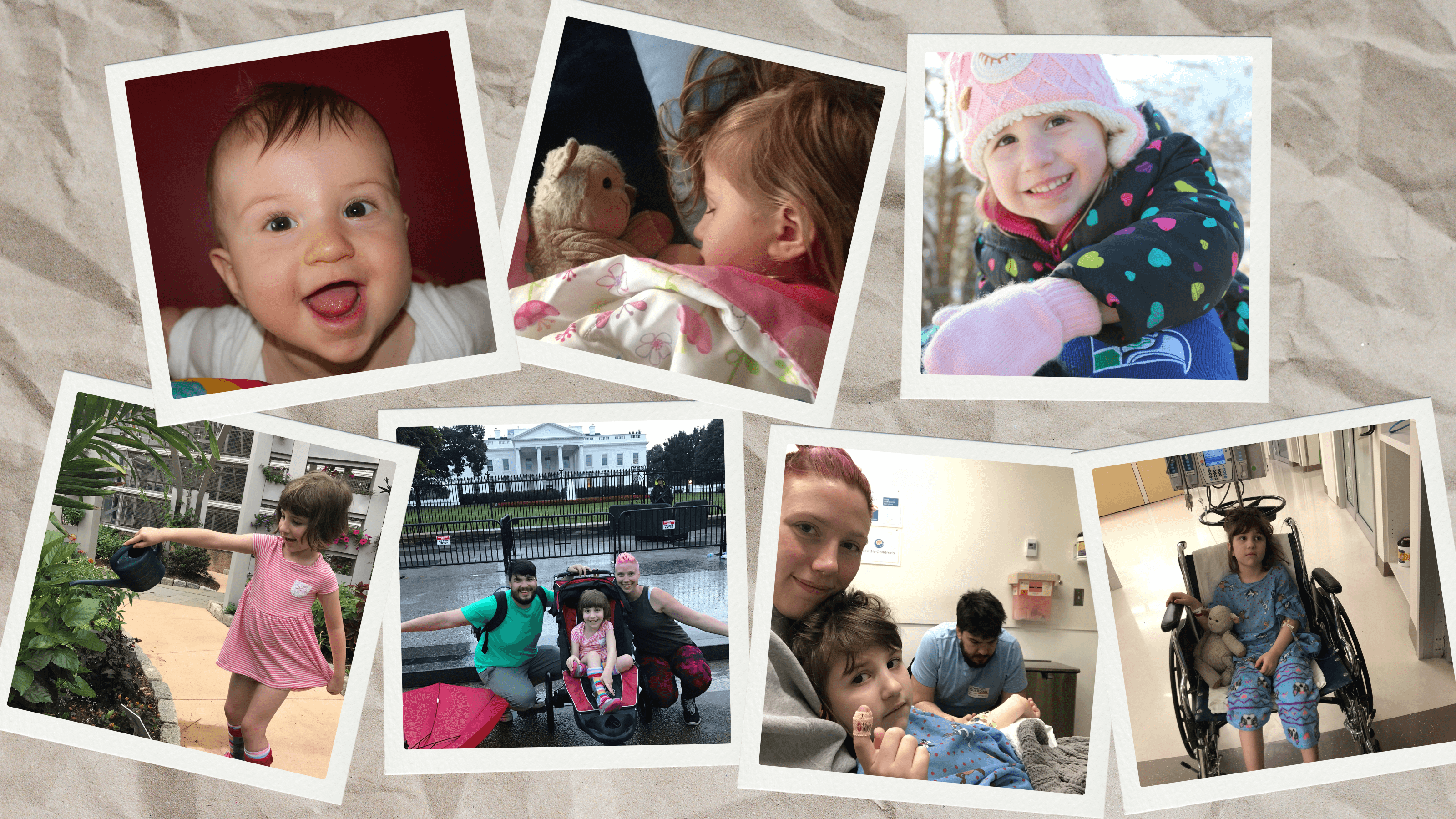
Tanja first noticed that her daughter “Mackenzie,” born in 2011, wasn’t meeting developmental milestones at 8 months old. She wasn’t pulling up to standing or cruising around furniture. Her pediatrician’s advice? “Stop holding the baby so much.”
After physical therapy, Mackenzie began walking at 22 months. By age three, her parents noticed that she was becoming clumsier and finding it harder to keep up with the other kids. “We started seeing a sharp decline in her abilities,” said Tanja. “Her gait was changing, she was losing her ability to jump or run, and she stopped growing.”
Despite therapy, her condition continued to worsen. Finally, after her four-year well child checkup, her pediatrician sent her to Seattle Children’s Hospital for testing, where they considered cerebral palsy but diagnosed her with failure to thrive.
Doctors first suspected that Mackenzie might have a metabolic disorder when she began experiencing absence seizures—brief, sudden, and temporary losses of consciousness. Finally, in 2016 at age five, she had the genetic testing that definitively diagnosed her with ARG1-D.
Armed with a diagnosis, Tanja and her family turned their focus to managing Mackenzie’s condition. She was placed on a low protein diet and given a seizure medication that unfortunately caused night terrors. “There was a big spike in anxiety for her and for us,” Tanja said. “And the low protein diet was a sharp shift in our lifestyle. Mackenzie had lots of food aversions.”
Medical management was challenging. They had to persuade Mackenzie to drink her amino acid formula, which she would sip slowly three time a day over the course of a few hours. With the new regimen, the progression of her physical disabilities slowed but did not stop. “She was more aware that she would fall and experienced a serious loss of confidence,” said Tanja. “She was losing her spark.” Her seizures became less frequent, but she still struggled in school.
The family soon found the National Urea Cycle Disorders Foundation (NUCDF), the national advocacy organization for people affected by urea cycle disorders. They connected with Cindy Le Mons, then executive director of the organization. “Cindy was phenomenal, helping us and supporting us through that process,” said Chris.
They attended their first NUCDF Family Conference in 2017 where they connected with doctors, met other UCD families, and learned about new research underway. They did not, however, meet any other ARG1-D families.
“We were desperate to talk to other ARG1-D families,” said Tanja. “Once we connected with the first family in California, we would talk on the phone for hours. That was hopeful; their child was older, with gait abnormalities but super smart. We wanted Mackenzie’s brain to be OK, for her to be able to learn, be independent, and give back to the community.”
Early development of pegzilarginase
At about the same time, early development of pegzilarginase was already underway, thanks to researchers at Baylor College of Medicine, support from NUCDF, and foundational research from NUCDF’s research partner, the NIH-funded Urea Cycle Disorders Consortium (UCDC).
Brendan Lee, MD, PhD first thought of the idea for enzyme replacement therapy at a 2014 meeting focused on cancer research, two years before Mackenzie was diagnosed. He had seen a poster in which the researchers were assessing the value of arginase to fight cancer. “The cancer they were working with required arginine to grow, so the idea was to deprive the cancer of arginine by administering arginase to break it down,” Dr. Lee said in a Baylor “From the Labs” article. He wondered, would this approach work for arginase deficiency?
He discussed the idea with Lindsay Burrage, MD, PhD, then a postdoctoral fellow in his lab. She applied for an NUCDF fellowship to support this project and launched a collaboration with the group of researchers studying the use of arginase in cancer. “We were able to demonstrate that the enzyme successfully lowered plasma arginine levels in mouse models of arginase deficiency,” said Dr. Burrage. Her promising results were published in a 2015 paper.
The company involved in the cancer study, Aeglea BioTherapeutics, decided to pursue Dr. Burrage’s approach to treat arginase deficiency. A few years later, a product was available for testing.
Aeglea launched a Phase 1 (safety) clinical trial in 2018, then a Phase 3 trial in May 2019 to confirm the new treatment’s efficacy in a randomized, double-blind, placebo-controlled study.
Joining a clinical trial
Initially, Tanja was not eager to participate in research. When the clinicians at Seattle Children’s first approached her about Aeglea’s early pegzilarginase trials, she declined. “It seemed scary,” she said. But after learning more during a UCDC longitudinal study visit, she began to reconsider.
“I learned about clinical trials, what a Phase 3 trial is, and how Mackenzie could be affected,” she said. “I talked with our pediatrician, who had no connection to the trial, about enzyme replacement therapies. They assured me that these treatments were safe and had been around a long time.”
In early 2018, Chris and Tanja attended a patient advisory meeting hosted by NUCDF between ARG1-D families and Aeglea BioTherapeutics. Cindy Le Mons served as moderator along with Debra Hook, a dietitian and NUCDF board member. The day-long meeting highlighted the ARG1-D patient journey, challenges, unmet needs, and hopes for the future.
Tanja eventually enrolled Mackenzie in the Phase 3 trial in the summer of 2019. Participating in the trial was intense, she said. “There were many blood draws and lots of waiting; we gave so many bribes and rewards to keep Mackenzie going. At first, we had multiple visits a week, plus weekly four- to five-hour visits for infusions.”
Frequent assessments were also a requirement of the trial. “It was a massive drain on all of us,” Tanja said. “Those were 8-hour days, with a 3-minute walk test, fine motor and balance tests, questions from a psychologist, academic testing. Mackenzie hated it. She felt like a guinea pig—a lot of that stuff was hard.” The whole family, grandparents included, would attend the visits, working to turn them into a fun adventure.
With a double-blind, placebo-controlled trial, participants are randomly assigned to treatment groups, and neither they nor the researchers know who is receiving the active treatment or a placebo. As a result, Tanja and Chris didn’t know whether Mackenzie was getting the medication or not for the first year.
Trial participation is not easy for families, Chris said. “Some families would have to travel very long distances to get treatment. It would mean missing a day of school and interrupting their lives.” Deciphering the paperwork was also challenging. “If you haven't been involved in trials before, that can be nerve wracking and scary. The only way to work your way through that is by reading, talking to physicians, and talking to other patients, to understand the hope for this treatment.”
Participation in the trial was interrupted by an event that rocked the research world, stopping studies across the country: the Covid pandemic. “During Covid, everything shut down. Mackenzie was off drug for six months,” said Tanja. “Fortunately, she had no strong reactions to stopping the medication.”
In time, however, the trial restarted and they eventually learned that Mackenzie had been on the active medication during the trial, not a placebo. Blood tests showed that after treatment with pegzilarginase, Mackenzie’s arginine levels were normal. “We cried. It was so meaningful,” said Tanja.
Because Mackenzie was on the less severe end of the spectrum, gauging the treatment effects was difficult. Over time, though, they saw improvements, ranging from positive remarks from Mackenzie’s teachers to better test results. “It became easier to talk with her, and her protein aversion lessened,” said Tanja. “We were able to wean her off her seizure medications, reduce her formula, and increase her protein intake from 8 grams to 15 grams per day. She jumped four levels in reading in less than a year and improved in math. It was a massive quality of life booster for all of us.”
Maintaining safe ammonia levels also seemed easier; when Mackenzie was on drug, she experienced fewer high ammonia crises.
Other patients in the trial were also seeing positive changes in their abilities. One severely affected patient saw fewer hospitalizations, became more verbal and even started to walk again. Others were seeing improvements in motor functions and quality of life.
“We were very excited about this,” said Chris. “We did not think that the symptoms would be reversible. When the arginase treatment stopped [during Covid], however, walking progressively became difficult again, showing the value of arginase to treat the condition.”
Stepping up to advocate for the patient community
Over time, Tanja and Chris became leaders in the ARG1-D patient community. After a 2020 patient listening session with Aeglea, they decided to launch the Arginase 1 Deficiency Foundation to give affected families a focused voice.
“We knew how hard it had been to find ARG1-D families,” said Chris. “In July 2020, we started the foundation, established an LLC, and grew it from there. We had no idea what we were doing. We tried to keep people updated on what was happening by launching a website and Facebook page. We quickly had more people finding us, especially those who were newly diagnosed.”
Their voice would soon become more important. In April 2022, Aeglea BioTherapeutics applied for approval for pegzilarginase to the FDA. But instead of the long-awaited approval decision, two months later they received a Refuse to File letter from the agency requesting additional information. Following that announcement, Aeglea’s share price dropped significantly. The company reduced its workforce and shifted resources.
Patients in the United States eventually lost access to the life-saving drug in 2023. “Losing access to the drug was horrible and devastating,” said Tanja. They heard about the change from Aeglea’s patient advocacy representatives on a call with a few other families. “All of us felt deeply betrayed.”
The patient community rallied and in an April 2023 announcement, the ARG1-D Foundation launched a petition asking Aeglea to reintroduce pegzilarginase. Tanja was among those quoted in the announcement.
In July 2023, Immedica Pharma, based in Switzerland, acquired global rights to pegzilarginase from Aeglea, raising hopes of a new path to FDA approval and sustained patient access to the treatment.
Over time, about 18 patients in the United States were able to resume taking the drug under expanded access, also known as compassionate use—an FDA designation that allows patients individually working with their physicians to access investigational drugs outside of clinical trials. “Everyone had to get their own approval, and all treatment clinics had to go through an approval process,” said Chris. In July 2024, Mackenzie was able to restart the medication.
Celebrating approval, looking ahead
In January 2026, Immedica announced that FDA accepted its resubmission of a Biologics License Application for pegzilarginase for the treatment of ARG1-D. On February 23, FDA issued a formal approval letter. The ARG1-D community could finally celebrate.
“This is not just a milestone,” Chris wrote in an announcement about the approval. “This is hope realized.”
She is optimistic about the future. “If we can continue to push forward newborn screening, we are hopeful that ARG1-D can be caught at a young age. Then, patients could be treated early and may never have the physical symptoms or the learning disabilities.”
The pegzilarginase journey is not over. A trial is currently underway to support approval of the treatment for children two and under. “It would mean that young children and babies who are diagnosed could start treatment before the symptoms begin, potentially before the disease has a chance to do the damage,” said Chris. “Very positive test results have recently come out and we hope that an approval for use in children two and under is ahead.”
Currently, pegzilarginase is administered via once-weekly injections. “We hope it will eventually become less invasive, but for now we will happily take the FDA-approved weekly injections,” said Tanja.
The Arginase 1 Deficiency Foundation is helping support new research. They recently hosted a fundraiser, the Hope on the Court Pickleball Tournament. Proceeds will support the NUCDF fellowship for Shradha Suyal, PhD, who is conducting research in the Dudley Lab at Pacific Northwest Research Institute to understand the severity of genetic variants causing ARG1-D.
Chris emphasizes how important research participation is for rare disease communities: “Your involvement is very, very important. Maybe it won’t be a big trial, maybe it will be just answering questions in a survey, or being on a registry, and always, always sharing your story. Those are all important things we can do to make sure that people know we are here, that we are looking for treatments and cures.”
The Arginase 1 Deficiency (ARG1-D) Foundation is made up of parents, family members, friends and caregivers who have faced an ARG1-D diagnosis. They provide information, resources, support, and community. Learn more at https://arg1d.org.
The National Urea Cycle Disorders Foundation is dedicated to saving and improving the lives of children and adults affected by urea cycle disorders (UCDs) and raising awareness. NUCDF serves as a lifeline to patients, families, and medical professionals worldwide seeking information, support, and hope. Learn more at www.nucdf.org.
Read More
U.S. FDA has granted accelerated approval of Loargys® (pegzilarginase-nbln) for the treatment of hyperargininemia in patients 2 years and older with Arginase 1 Deficiency (ARG1-D), press release, Immedica Pharma, Feb. 23, 2026. Accessed March 5, 2026.
Prescribing information for Loargys,® downloadable PDF, Immedica Pharma. Accessed March 5, 2026.
Burrage, L. C., Sun, Q., Elsea, S. H., Jiang, M. M., Nagamani, S. C., Frankel, A. E., Stone, E., Alters, S. E., Johnson, D. E., Rowlinson, S. W., Georgiou, G., Members of Urea Cycle Disorders Consortium, & Lee, B. H. (2015). Human recombinant arginase enzyme reduces plasma arginine in mouse models of arginase deficiency. Human molecular genetics, 24(22), 6417–6427. https://doi.org/10.1093/hmg/ddv352
Diaz, G. A., Schulze, A., McNutt, M. C., Leão-Teles, E., Merritt, J. L., 2nd, Enns, G. M., Batzios, S., Bannick, A., Zori, R. T., Sloan, L. S., Potts, S. L., Bubb, G., & Quinn, A. G. (2021). Clinical effect and safety profile of pegzilarginase in patients with arginase 1 deficiency. Journal of inherited metabolic disease, 44(4), 847–856. https://doi.org/10.1002/jimd.12343
Russo, R. S., Gasperini, S., Bubb, G., Neuman, L., Sloan, L. S., Diaz, G. A., Enns, G. M., & PEACE Investigators (2024). Efficacy and safety of pegzilarginase in arginase 1 deficiency (PEACE): a phase 3, randomized, double-blind, placebo-controlled, multi-centre trial. EClinicalMedicine, 68, 102405. https://doi.org/10.1016/j.eclinm.2023.102405
Rodrigues, A. M., Baylor College of Medicine Researchers set the foundation for novel rare disease treatment. Baylor College of Medicine, “From the Labs,” May 30, 2024. Accessed March 2, 2026.


